Welcome Message
Dear Esteemed Colleagues, Researchers, Clinicians, Academicians, and Healthcare Professionals,
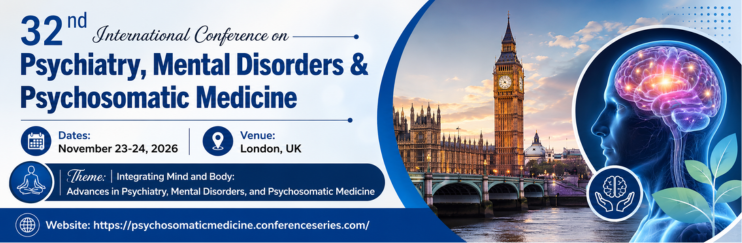
It is our great pleasure to welcome you to the 32nd International Conference on Psychiatry, Mental Disorders & Psychosomatic Medicine, taking place on November 23–24, 2026, in London, UK.
Under the theme, "Integrating Mind and Body: Advances in Psychiatry, Mental Disorders, and Psychosomatic Medicine," this conference brings together leading experts, practitioners, researchers, and innovators from around the world to explore the latest developments in mental health care, psychiatric research, and the complex relationship between psychological and physical well-being.
Over the course of two inspiring days, participants will have the opportunity to engage in thought-provoking keynote presentations, interactive discussions, scientific sessions, and networking opportunities. The conference aims to foster interdisciplinary collaboration, encourage the exchange of groundbreaking research, and highlight innovative approaches that improve patient outcomes and advance the field of mental health.
As the global understanding of mental disorders and psychosomatic conditions continues to evolve, this gathering serves as an important platform for sharing knowledge, addressing emerging challenges, and shaping the future of integrated mental health care.
We are honored by your participation and contribution to this prestigious event. Your expertise, insights, and dedication are invaluable in driving progress toward a more comprehensive and compassionate approach to mental health and well-being.
We look forward to welcoming you to London for a rewarding and memorable conference experience.
Warm regards,
Organizing Committee
Psychosomatic Medicine 2026a
November 23–24, 2026 | London, UK
About Psychosomatic Medicine 2026
The 32nd International Conference on Psychiatry, Mental Disorders & Psychosomatic Medicine (Psychosomatic Medicine 2026) will be held on November 23–24, 2026, in London. The conference is dedicated to advancing knowledge and fostering collaboration in the fields of psychiatry, mental health, behavioral sciences, and psychosomatic medicine.
Centered around the theme “Integrating Mind and Body: Advances in Psychiatry, Mental Disorders, and Psychosomatic Medicine,” the conference will bring together psychiatrists, psychologists, neuroscientists, physicians, mental health practitioners, researchers, educators, and healthcare professionals from across the globe. The event aims to provide a dynamic platform for the exchange of innovative research, clinical experiences, and emerging therapeutic approaches that address the intricate connections between mental and physical health.
Psychosomatic Medicine 2026 will feature keynote lectures, plenary sessions, scientific presentations, panel discussions, workshops, and networking opportunities designed to encourage interdisciplinary dialogue and collaboration. Participants will explore a wide range of topics, including psychiatric disorders, psychosomatic illnesses, stress-related conditions, behavioral medicine, neuropsychiatry, psychotherapy, integrated healthcare models, mental health policy, and advances in diagnosis and treatment.
The conference seeks to highlight the growing importance of holistic, patient-centered care by emphasizing the interaction between psychological, biological, and social factors in health and disease. Through the sharing of scientific discoveries and clinical best practices, Psychosomatic Medicine 2026 aims to contribute to improved patient outcomes, enhanced mental health services, and a deeper understanding of the mind–body connection.
Join leading experts and innovators in London for two days of insightful discussions, professional development, and collaborative opportunities that will help shape the future of psychiatry, mental health, and psychosomatic medicine.
Why Attend Psychosomatic Medicine 2026?
Attending the 32nd International Conference on Psychiatry, Mental Disorders & Psychosomatic Medicine (Psychosomatic Medicine 2026) offers a unique opportunity to gain insights into the latest advances in mental health, psychiatry, and psychosomatic medicine while connecting with leading experts from around the world.
Key Reasons to Attend
1. Learn from International Experts
Gain valuable knowledge from renowned psychiatrists, psychologists, researchers, and healthcare professionals through keynote lectures, scientific sessions, and expert panel discussions.
2. Explore Emerging Research
Discover the latest findings, innovative treatment approaches, and evidence-based practices in psychiatry, mental disorders, psychosomatic medicine, behavioral health, and neuroscience.
3. Understand the Mind–Body Connection
Explore how psychological, biological, and social factors interact to influence health and disease, helping to improve holistic and patient-centered care.
4. Expand Your Professional Network
Connect with clinicians, researchers, academics, policymakers, and industry professionals from diverse disciplines and countries, creating opportunities for collaboration and future partnerships.
5. Present Your Research
Share your work with an international audience, receive constructive feedback from experts, and increase the visibility and impact of your research.
6. Gain Continuing Education and Professional Development
Enhance your clinical and research expertise by learning about current trends, innovative therapies, diagnostic tools, and integrated healthcare approaches.
7. Discover Innovative Clinical Practices
Learn about advances in psychotherapy, psychiatric treatment, psychosomatic interventions, digital mental health technologies, and multidisciplinary care models.
8. Foster Interdisciplinary Collaboration
Engage in meaningful discussions that bridge psychiatry, psychology, neuroscience, internal medicine, public health, and behavioral sciences to address complex healthcare challenges.
9. Stay Ahead of Global Mental Health Trends
Understand emerging issues, policy developments, and future directions shaping mental health services and psychosomatic medicine worldwide.
10. Experience a Global Scientific Platform
Participate in a vibrant international forum dedicated to advancing research, improving patient outcomes, and promoting innovation in mental healthcare.
Target Audience
The 32nd International Conference on Psychiatry, Mental Disorders & Psychosomatic Medicine (Psychosomatic Medicine 2026) is designed for a diverse audience of professionals, researchers, educators, and practitioners involved in mental health, behavioral sciences, and integrated healthcare.
The conference welcomes:
-
Psychiatrists and Psychiatric Specialists
-
Clinical Psychologists and Counseling Psychologists
-
Psychotherapists and Psychoanalysts
-
Mental Health Practitioners
-
Psychosomatic Medicine Specialists
-
Neurologists and Neuroscientists
-
Behavioral Health Professionals
-
Primary Care Physicians and General Practitioners
-
Internal Medicine Specialists
-
Family Medicine Practitioners
-
Nurses and Psychiatric Nurses
-
Social Workers and Mental Health Counselors
-
Occupational Therapists
-
Rehabilitation Specialists
-
Public Health Professionals
-
Healthcare Administrators and Policymakers
-
Academic Researchers and Scientists
-
University Professors and Educators
-
Clinical Research Associates
-
Pharmaceutical and Healthcare Industry Representatives
-
Medical Device and Digital Health Innovators
-
Graduate Students, Postgraduate Students, and Doctoral Researchers
-
Early-Career Investigators and Young Scientists
Sessions & Tracks
Session 01: Advances in Psychiatry and Mental Health Care
This session explores recent developments in psychiatric research, clinical practice, and mental healthcare delivery. Topics include innovative diagnostic approaches, personalized treatment strategies, psychopharmacology, psychotherapy, community mental health, and emerging technologies that are transforming psychiatric care and improving patient outcomes worldwide.
Session 02: Mood Disorders and Depression
This session focuses on the epidemiology, neurobiology, diagnosis, and management of mood disorders, including major depressive disorder, persistent depressive disorder, and bipolar disorder. Discussions will highlight current treatment approaches, risk factors, prevention strategies, and emerging therapies designed to improve recovery and quality of life.
Session 03: Anxiety, Trauma, and Stress-Related Disorders
This session examines anxiety disorders, panic disorder, phobias, generalized anxiety disorder, post-traumatic stress disorder, acute stress disorder, and adjustment disorders. Participants will explore the psychological and biological mechanisms of stress, trauma-informed care, and evidence-based interventions for affected individuals.
Session 04: Schizophrenia and Psychotic Disorders
This session addresses the latest advances in understanding schizophrenia, schizoaffective disorder, delusional disorders, and related psychotic conditions. Topics include neurobiological mechanisms, early detection, pharmacological treatments, psychosocial rehabilitation, and strategies for long-term patient management.
Session 05: Psychosomatic Medicine and Mind-Body Interactions
This session focuses on the relationship between psychological processes and physical health. Discussions will cover psychosomatic disorders, somatic symptom disorders, stress-related illnesses, psychophysiological mechanisms, behavioral medicine, and integrated approaches that promote holistic patient care.
Session 06: Child and Adolescent Psychiatry
This session explores mental health challenges affecting children and adolescents, including ADHD, autism spectrum disorder, conduct disorder, learning disabilities, and emotional disorders. Presentations will emphasize early diagnosis, intervention strategies, developmental psychopathology, and family-centered care.
Session 07: Geriatric Psychiatry and Neurocognitive Disorders
This session examines psychiatric conditions affecting older adults, including dementia, delirium, depression, anxiety, and age-related cognitive decline. Participants will discuss assessment techniques, treatment approaches, caregiving challenges, and innovations in geriatric mental healthcare.
Session 08: Addiction Psychiatry and Substance Use Disorders
This session covers alcohol dependence, drug addiction, behavioral addictions, and co-occurring psychiatric conditions. Topics include prevention, screening, treatment modalities, relapse prevention, rehabilitation programs, and public health approaches to substance use disorders.
Session 09: Psychotherapy and Behavioral Interventions
This session highlights evidence-based psychotherapeutic approaches, including cognitive behavioral therapy, dialectical behavior therapy, psychodynamic therapy, interpersonal therapy, family therapy, and mindfulness-based interventions. Discussions will focus on clinical effectiveness and patient-centered treatment planning.
Session 10: Digital Psychiatry and Future Innovations in Mental Health
This session explores the growing role of digital technologies in psychiatry, including telepsychiatry, artificial intelligence, mobile health applications, wearable devices, virtual reality, and digital therapeutics. Presentations will examine opportunities, challenges, ethical considerations, and future directions for technology-enabled mental healthcare.
Session 11: Personality Disorders and Emotional Regulation
This session focuses on the assessment, diagnosis, and management of personality disorders, including borderline, narcissistic, antisocial, and avoidant personality disorders. Discussions will explore emotional dysregulation, interpersonal functioning, therapeutic interventions, and long-term treatment strategies.
Session 12: Sleep Disorders and Mental Health
This session examines the complex relationship between sleep and psychiatric well-being. Topics include insomnia, hypersomnolence, narcolepsy, parasomnias, circadian rhythm disorders, and the impact of sleep disturbances on mental health, cognition, and quality of life.
Session 13: Women's Mental Health and Perinatal Psychiatry
This session highlights mental health issues affecting women across the lifespan, including reproductive mental health, pregnancy-related psychiatric disorders, postpartum depression, menopause-related psychological changes, and gender-specific approaches to psychiatric care.
Session 14: Consultation-Liaison Psychiatry and Integrated Care
This session explores the psychiatric care of patients with medical and surgical illnesses. Topics include psychiatric manifestations of physical diseases, consultation-liaison services, integrated healthcare models, collaborative care approaches, and management of complex medical-psychiatric conditions.
Session 15: Suicide Prevention and Psychiatric Emergencies
This session addresses critical aspects of suicide risk assessment, self-harm prevention, crisis intervention, and psychiatric emergency management. Participants will discuss evidence-based prevention strategies, emergency response systems, and multidisciplinary approaches to patient safety.
Session 16: Neuropsychiatry and Brain-Behavior Relationships
This session focuses on the intersection of neurology and psychiatry, exploring disorders involving cognition, behavior, and brain function. Topics include traumatic brain injury, neurodegenerative disorders, epilepsy-related psychiatric conditions, and advances in neuroimaging and neuroscience research.
Session 17: Cultural Psychiatry and Global Mental Health
This session examines the influence of culture, ethnicity, social determinants, and global health disparities on mental health outcomes. Discussions will highlight culturally sensitive care, international mental health initiatives, policy development, and strategies for improving access to services worldwide.
Session 18: Forensic Psychiatry, Ethics, and Mental Health Law
This session explores the legal and ethical dimensions of psychiatric practice. Topics include criminal responsibility, competency assessments, risk management, patient rights, mental health legislation, forensic evaluations, and ethical challenges in clinical and research settings.
Session 19: Resilience, Mental Wellness, and Preventive Psychiatry
This session focuses on promoting psychological resilience, emotional well-being, and preventive mental healthcare. Presentations will cover stress management, mental health promotion, workplace wellness, community interventions, public health initiatives, and strategies for reducing the burden of mental illness.
Session 20: Psychopharmacology and Advances in Drug Therapy
This session focuses on recent developments in psychiatric medications and pharmacological management of mental disorders. Topics include antidepressants, antipsychotics, mood stabilizers, anxiolytics, novel drug targets, personalized medicine, treatment-resistant conditions, side effect management, and future directions in psychopharmacology research and clinical practice.
Session 21: Psychosomatic Medicine and Stress-Related Disorders
This session explores the interaction between psychological stress and physical illness, including psychosomatic disorders, somatic symptom disorders, conversion disorders, and illness anxiety. It highlights the role of stress physiology, mind-body connections, behavioral interventions, and integrated treatment approaches.
Session 22: Cognitive Disorders and Dementia Care
This session focuses on neurocognitive disorders such as Alzheimer’s disease, vascular dementia, Lewy body dementia, and delirium. It emphasizes early diagnosis, cognitive assessment tools, pharmacological and non-pharmacological interventions, caregiver support, and rehabilitation strategies.
Session 23: Eating Disorders and Nutritional Psychiatry
This session examines anorexia nervosa, bulimia nervosa, binge-eating disorder, and related feeding disorders. Topics include psychological mechanisms, nutritional rehabilitation, multidisciplinary treatment, body image disturbances, and emerging research in nutritional psychiatry.
Session 24: Behavioral Addictions and Impulse Control Disorders
This session covers gambling disorder, internet addiction, gaming disorder, kleptomania, pyromania, and other impulse control conditions. It focuses on neurobiological mechanisms, behavioral therapies, prevention strategies, and rehabilitation models.
Session 25: Psychotherapy Innovations and Integrative Approaches
This session highlights advances in psychotherapeutic techniques including CBT, DBT, acceptance and commitment therapy, mindfulness-based therapies, and integrative psychotherapy approaches. It also explores digital psychotherapy and blended treatment models.
Session 26: Emergency Psychiatry and Acute Care Management
This session addresses psychiatric emergencies such as acute psychosis, severe agitation, suicidal behavior, delirium, intoxication, and withdrawal states. It emphasizes rapid assessment, crisis intervention, stabilization techniques, and emergency psychiatric protocols.
Session 27: Psychoneuroimmunology and Mind-Body Science
This session explores the interaction between the nervous system, immune system, and psychological processes. Topics include stress-related immune changes, inflammation in depression, chronic illness links, and emerging research in mind-body medicine.
Session 28: Artificial Intelligence and Digital Mental Health
This session focuses on the role of AI, machine learning, digital platforms, mobile applications, wearable devices, and telepsychiatry in mental healthcare. It highlights innovations in diagnosis, monitoring, treatment planning, and personalized mental health support.
Session 29: Psychiatric Rehabilitation and Recovery-Oriented Care
This session explores rehabilitation models for individuals with severe mental illness. Topics include social reintegration, vocational rehabilitation, psychosocial interventions, supported housing, and recovery-oriented mental health systems.
Session 30: Future Directions in Psychiatry and Psychosomatic Medicine
This concluding session highlights emerging trends in psychiatry, including precision medicine, neurotechnology, global mental health initiatives, digital transformation, preventive psychiatry, and innovations shaping the future of mental healthcare worldwide.
Market Analysis Report
The global psychiatry and mental health market is expected to witness strong and sustained growth over the next five years, driven by increasing prevalence of mental disorders, rising awareness, digital transformation in healthcare, and growing demand for integrated mind–body treatment approaches. Mental health conditions such as depression, anxiety disorders, bipolar disorder, schizophrenia, and stress-related psychosomatic illnesses are becoming major public health concerns worldwide, significantly contributing to healthcare expenditure and research investment.
Market Size and Growth Forecast (Estimated)
The global mental health and psychiatry market is projected to grow steadily with a strong CAGR due to rising burden and healthcare modernization:
-
Global Mental Health Market (2026): approx. USD 420–450 billion
-
Projected Market Size (2031): approx. USD 600–700 billion
-
Expected CAGR: 6.5% – 8.2% (2026–2031)
Psychiatry services, psychosomatic medicine, digital mental health tools, and psychotherapy segments are the key contributors to this growth.
Key Growth Drivers
-
Increasing prevalence of mental disorders globally
-
Rising stress, lifestyle disorders, and urbanization
-
Expansion of telepsychiatry and digital mental health platforms
-
Growing integration of AI in diagnosis and treatment planning
-
Rising demand for psychosomatic and mind-body treatment approaches
-
Government initiatives for mental health awareness and funding
-
Expansion of workplace mental health programs
Digital Psychiatry and Technology Trends
Digital mental health is expected to become one of the fastest-growing segments:
-
Telepsychiatry adoption growth: 12–15% annually
-
Mental health mobile applications market: USD 10–18 billion by 2031
-
AI-based mental health tools: expected CAGR above 20%
-
Wearable mental health monitoring devices: rapid adoption in clinical care
Psychosomatic Medicine Market Outlook
Psychosomatic medicine is gaining importance due to increasing recognition of stress-related physical conditions such as:
-
Chronic pain disorders
-
Cardiovascular stress-related illness
-
Gastrointestinal psychosomatic conditions
-
Somatic symptom disorders
Estimated growth:
-
Market value: USD 40–55 billion (2026)
-
Projected: USD 70–90 billion (2031)
Regional Market Insights
-
North America: Largest market share due to advanced healthcare systems
-
Europe: Strong growth in public mental health programs
-
Asia-Pacific: Fastest growing region due to population size and awareness increase
-
Middle East & Africa: Emerging market with rising investment in healthcare infrastructure
Conference & Academic Market Trend
Scientific conferences in psychiatry and mental health are also growing rapidly:
-
Global psychiatric conference market growth: 5%–7% CAGR
-
Increase in hybrid (physical + virtual) conferences
-
Rising participation of researchers, clinicians, and industry stakeholders
-
Strong demand for interdisciplinary themes (neuroscience + psychosomatic medicine + AI)
Future Outlook (2031 Vision)
By 2031, psychiatry and mental health care will be characterized by:
-
Personalized and precision psychiatry
-
AI-assisted diagnosis and therapy
-
Fully integrated mind–body healthcare models
-
Expansion of digital therapeutics
-
Increased global mental health collaboration
-
Strong focus on prevention and early intervention
Abstract Submission & Registration
Abstract Submission
Submit your abstract for the 32nd International Conference on Psychiatry, Mental Disorders & Psychosomatic Medicine, scheduled for November 23–24, 2026 in London, UK. Researchers, clinicians, academicians, and healthcare professionals are invited to submit original research, case studies, and review papers covering psychiatry, mental health, psychosomatic medicine, neuropsychiatry, behavioral health, and related disciplines. All submitted abstracts will be reviewed by the scientific committee based on relevance, originality, and scientific quality. Accepted abstracts will be presented as oral or poster presentations. This is an opportunity to share your research with a global audience, gain international recognition, and contribute to advancements in mental health science and psychosomatic medicine.
Registration
Register now for the 32nd International Conference on Psychiatry, Mental Disorders & Psychosomatic Medicine, taking place on November 23–24, 2026 in London, UK. The registration process is open for delegates, speakers, students, researchers, clinicians, and industry professionals interested in psychiatry, psychology, and psychosomatic medicine. Participants will gain access to scientific sessions, keynote lectures, workshops, poster presentations, and networking opportunities with global experts. Early registration is recommended to secure discounted fees and confirm participation in one of the most anticipated mental health conferences of 2026. Registration includes access to all sessions, conference materials, certification, and networking events.
Contact Us
For any inquiries regarding the 32nd International Conference on Psychiatry, Mental Disorders & Psychosomatic Medicine (2026), please contact the organizing committee for support related to abstract submission, registration, sponsorship, speakers, and general information. The conference team is available to assist participants with all queries regarding participation, travel guidance, accommodation, and scientific program details.
Email: contact@speakermeeting.com / neurologists@speakermeeting.com
Phone: +44-28 80090005
Address: Conference Series LLC Ltd, 35 Ruddlesway, Windsor, Berkshire, SL4 5SF
Website: https://psychosomaticmedicine.conferenceseries.com/
Participants are encouraged to reach out for collaboration opportunities, sponsorship packages, and academic partnerships related to psychiatry, mental health, and psychosomatic medicine research.
Past Conference Report
Psychosomatic Medicine 2025
Welcome to the Psychosomatic Medicine 2025, taking place October 17-18, 2025, in London, UK. Join us as we explore the theme "Transforming Psychiatry and Mental Health: Innovations, Challenges, and Global Perspectives" where global leaders in psychiatry, psychology, and allied fields will convene to discuss and innovate. This conference offers a platform for professionals, researchers, and advocates to exchange knowledge on a wide spectrum of topics, from the latest treatments and preventive strategies to emerging issues like digital health and internet addiction.
Our program features engaging scientific sessions, interactive workshops, and insightful keynote presentations designed to foster collaboration and inspire change in mental health care practices. Whether you're seeking to deepen your clinical insights, expand your research horizons, or connect with peers, this event promises invaluable learning opportunities.
We invite you to be part of this transformative experience in Vancouver, where together, we'll shape the future of psychiatric care and promote mental well-being worldwide. Join us as we strive towards enhancing understanding, advancing treatments, and ensuring compassionate care for individuals and communities affected by mental health challenges.
Past Reports Gallery